
Most young people in distress don't walk into a counselor's office. They don't have the words, the permission, or the belief that anyone will listen. The barrier isn't access to a service — it's the first step. How do you make the first step small enough to take?
Start where they are
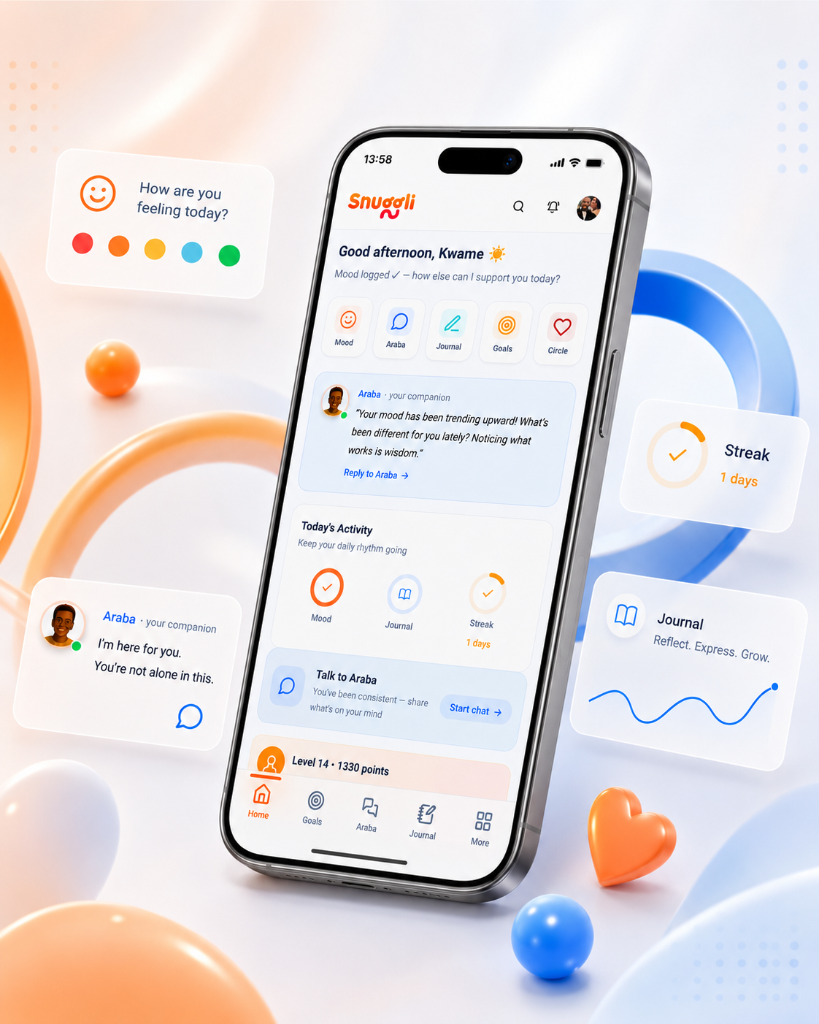
A 60-second check-in works because it asks for almost nothing. It doesn't demand a diagnosis or a story. It asks what has changed — in sleep, in mood, in the body — and it listens. That is often the first honest conversation a young person has about how they're doing.
Low pressure, high safety
The design has to hold two things at once: low enough pressure that a teenager will actually start, and high enough safety that distress is caught. That means:
- No clinical language at the door — just human questions.
- Silent risk detection that flags distress without making the young person perform it.
- A warm handoff to a human when it's needed — not a wall of forms.
The first step is the whole game
We overestimate how much young people need a complete service and underestimate how much they need a starting point they can reach. A check-in that takes a minute and asks the right questions can be the difference between a young person who spirals alone and one who gets connected to care. The first step is the whole game.