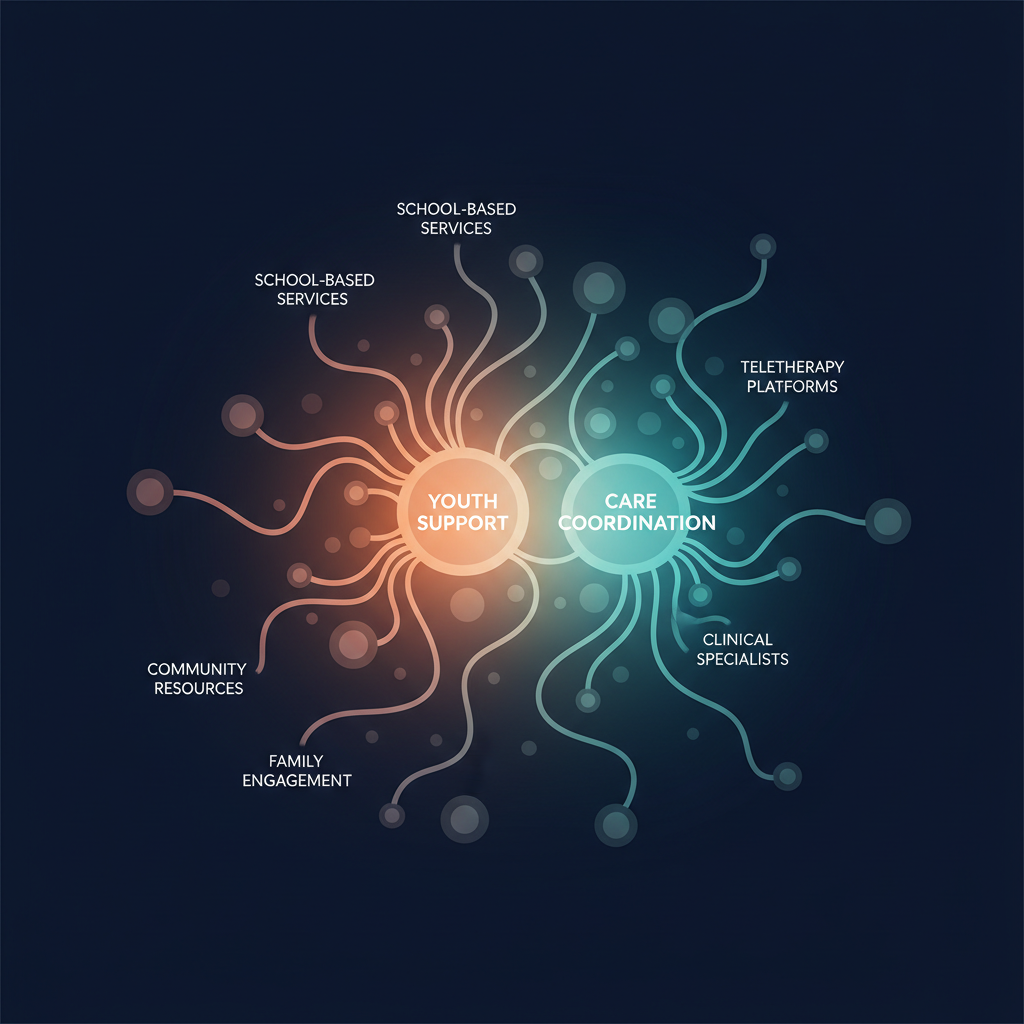

A referral is supposed to be a handoff — one professional entrusting another with a person's care. In practice, it is often the last recorded event. The young person is sent on, the form is filed, and the system assumes the rest happened. Most of the time, nobody checks.
The gap nobody owns
Between screening and completed care sits a gap that no single role owns. The teacher who noticed the distress isn't the counselor who receives the referral, who isn't the clinic that may or may not have capacity. Each step is someone else's responsibility — which means follow-through is everyone's blind spot.
When we asked frontline teams what they wished they could see, the answer was almost always the same: what happened next. Not whether a referral was made, but whether it was received, whether the young person showed up, and whether care was completed or quietly dropped.
What changes when follow-through is visible
When a pathway is tracked end to end, three things shift:
- Accountability gets shared, not scattered. Every step has a visible owner and a visible state — received, in progress, completed, or stalled.
- Bottlenecks become fixable. You can't improve a step you can't see. Tracked pathways expose where young people fall through, and where to invest.
- Care teams can act, not just record. A counselor who can see that a referral went unanswered can follow up — instead of assuming it was handled.
Measuring the right thing
Activity is easy to count: referrals made, check-ins completed, sessions logged. But activity is not care. Care is whether the young person was seen, whether the referral was completed, and whether follow-up happened. That is the metric that matters — and it is the one most systems never measure.
A connected pathway makes follow-through visible. That visibility is the difference between a system that refers and a system that cares.