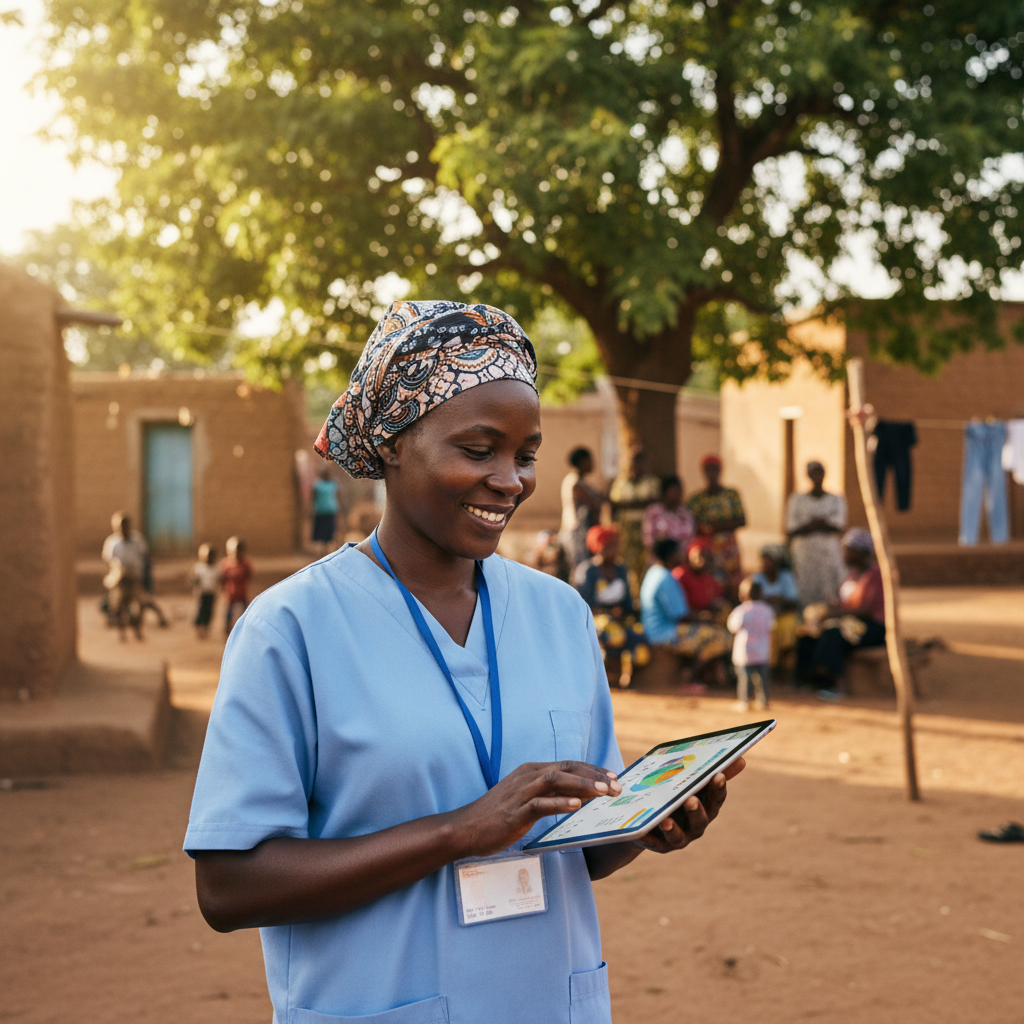
Most digital health tools are built in places with fast, constant internet — and then shipped to places that don't have it. The result is predictable: the tools work beautifully in the demo and fail in the field. If your care pathway disappears the moment the connection drops, you don't have a care pathway. You have a website.
Design for the worst hour
We design for the worst connectivity a user will experience in a typical week, not the best. That means a check-in that can start, pause, and resume without losing data. It means a case note that saves locally and syncs when a signal returns. It means the frontline worker in a rural clinic can do their job even when the internet is a memory.
Sync, don't assume
The pattern that works is store, then sync:
- Every action is saved to the device first.
- A background process pushes changes when a connection appears.
- Conflicts are resolved in favor of the human's most recent action — never silently overwritten.
This is not glamorous engineering. It is the difference between a tool that is used and a tool that is abandoned.
The offline-first principle
When you build offline-first, a surprising thing happens: the online experience gets better too. The app feels instant, because it never waits on the network to show what it already knows. Resilience and speed turn out to be the same design.